

Since 2010, the Global Law Experts annual awards have been celebrating excellence, innovation and performance across the legal communities from around the world.
posted 4 hours ago
The decision between a will vs trust in Singapore confronts every resident, expatriate and asset‑holder who wants to control what happens to their estate. The core question is practical: should you rely on a simple will that takes effect after death and passes through probate, or should you transfer assets into a trust structure, either a testamentary trust embedded in your will, or a lifetime (inter vivos) trust that operates while you are still alive? With a growing number of Singapore households holding cross‑border assets, and institutional trustee services expanding rapidly, the answer in 2026 increasingly depends on asset location, family complexity and how much probate friction you are prepared to accept.
This guide compares the two options dimension by dimension, covering probate avoidance, privacy, cost, tax, incapacity planning and cross‑border asset handling, and concludes with a clear decision framework. If you already know you need professional guidance, you can find a Singapore wills and estates lawyer through our directory.
A will is a written legal document that directs how your assets are distributed after death. Under Singapore law, a valid will must be made by a person aged 21 or above, set down in writing, signed by the testator in the presence of two witnesses who also sign the document. These formalities are set out in the Wills Act 1838 (Cap. 352) and summarised in official government guidance on the MyLegacy@LifeSG portal. A will only takes effect upon the testator’s death and, for Singapore‑situated assets, almost always requires a Grant of Probate before executors can collect and distribute the estate.
A testamentary trust, sometimes called a “will trust”, is a trust created by the terms of a will. It does not exist during the testator’s lifetime. Instead, it springs into operation after the will is admitted to probate. As the Singapore Law Gazette explains, a testamentary trust is a type of express trust that only comes into existence after the testator has passed away and the will is admitted to probate. This makes testamentary trusts the lowest‑cost trust option at the drafting stage, since the trust clause is simply incorporated into the will document itself.
Singapore follows a straightforward regime for will execution. The testator must sign the will at its foot or end, in the presence of two witnesses who are present at the same time. Neither witness (nor their spouse) may be a beneficiary under the will, or the gift to that person is void. Muslims domiciled in Singapore are governed by the Inheritance Certificate process under the Administration of Muslim Law Act rather than the Wills Act. The government’s MyLegacy portal provides step‑by‑step guidance on preparing a valid will.
A will remains the right starting point for most Singapore residents. It suits individuals whose assets are primarily located in Singapore, who have straightforward family structures and who want the lowest upfront legal cost. Common use cases include:
A lifetime trust, also called a living trust or inter vivos trust, is created during the settlor’s lifetime. The settlor transfers legal ownership of assets to a trustee, who holds and manages them for named beneficiaries according to the trust deed. Unlike a testamentary trust, a living trust operates immediately upon creation and funding. As MoneySense (Singapore’s national financial education programme) explains, a living trust is set up during a settlor’s lifetime, where the assets are transferred to the trust.
Living trusts come in two main varieties. A revocable trust allows the settlor to amend terms or reclaim assets at any time. An irrevocable trust generally cannot be amended once established, and the assets are permanently removed from the settlor’s personal estate. Choosing between them involves trade‑offs around control, creditor protection and, in foreign jurisdictions, potential tax consequences.
A living trust is the stronger option when probate avoidance, privacy or incapacity planning is a priority. Common scenarios include:
The table below distils the comparison between a will (including a testamentary trust) and a living trust across ten decision dimensions relevant to Singapore residents.
| Dimension | Will (incl. Testamentary Trust) | Living / Lifetime Trust |
|---|---|---|
| When it takes effect | Only on death; testamentary trust activates after probate. | Immediately upon creation and asset transfer. |
| Probate | Grant of Probate usually required for Singapore assets. | Typically avoids probate for assets held in trust. |
| Privacy | Will becomes public upon probate; trust terms may be exposed. | Trust deed remains a private document. |
| Typical setup cost | Lower upfront legal fees; probate costs arise later. | Higher drafting and trustee onboarding fees. |
| Distribution timing | Delayed until probate is obtained (weeks to months). | Trustee can distribute without court involvement. |
| Control in incapacity | No coverage, a separate Lasting POA is needed. | Successor trustee manages assets immediately. |
| Dispute risk | Wills are frequently contested in the Probate Division. | Trust disputes go to civil court; fiduciary duties may narrow contest grounds. |
| Cross‑border assets | Foreign grant or resealing often required; more friction. | If assets are retitled to trustee, local probate may be avoided. |
| Ease of change | Simple, execute a new will or codicil. | Revocable trusts are amendable; irrevocable trusts are not. |
| Tax implications | No estate duty in Singapore; foreign estate taxes may apply. | Depends on trust structure and asset location, verify with IRAS. |
The principal takeaway: a will remains the default for straightforward, Singapore‑only estates. A living trust earns its higher cost when probate avoidance, privacy, incapacity planning or cross‑border friction justifies the investment. Many families use both, a will as the safety net for residual assets and a trust for targeted asset classes.
Cost is often the first question in the will vs trust cost Singapore debate. The table below outlines typical fee ranges based on local practice.
| Cost item | Will (Option A) | Living Trust (Option B) |
|---|---|---|
| Basic document drafting | SGD 200 – SGD 500 for a simple will; SGD 500 – SGD 1,500+ with testamentary trust clauses | SGD 3,000 – SGD 10,000+ depending on complexity and trustee structure |
| Probate / Grant application | SGD 3,000 – SGD 10,000+ in legal fees; court filing fees additional | Not required for assets already in trust |
| Annual administration | None during testator’s lifetime | Institutional trustee: typically 0.5 % – 1.5 % of trust assets per year; independent trustees may charge flat annual fees |
| Asset retitling | Not applicable | Stamp duty, share transfer fees and administrative costs to transfer assets into the trust |
Compared to other types of trusts, the testamentary trust requires the lowest setup fee because it is built into the will itself, as DBS has noted in its consumer guides. A living trust is more expensive to establish but eliminates probate fees entirely for assets that have been properly retitled.
A simple, uncontested probate application in Singapore typically takes several weeks to a few months from filing to the issuance of the Grant of Probate. Contested cases or estates with incomplete documentation can take considerably longer. During this period, executors generally cannot access or distribute estate assets held by financial institutions.
A living trust eliminates this waiting period for assets already held by the trustee. The trustee can distribute or continue managing those assets according to the trust deed from the moment the settlor passes away, or immediately if the trust was established for incapacity planning.
For families with foreign assets, the timing gap widens further. Resealing a Singapore Grant of Probate in a Commonwealth jurisdiction, or applying for a fresh grant in a non‑Commonwealth country, can add months to the process. Retitling those foreign assets into a trust during the settlor’s lifetime can bypass this delay entirely, though the effectiveness depends on the laws of each foreign jurisdiction.
Singapore abolished estate duty in 2008. There is no inheritance tax or capital gains tax for residents. This removes a major driver that motivates trust creation in other countries. However, tax exposure does not disappear entirely:
The key principle: do not assume a trust saves tax in Singapore. The decision to use a trust here is driven by probate avoidance, privacy and control, not by tax efficiency. Always verify current obligations with IRAS and, for cross‑border assets, with qualified tax advisers in the relevant jurisdictions.
Once a will is admitted to probate in Singapore, it becomes part of the public court record. Anyone can apply to inspect the file. For high‑net‑worth individuals or families who value discretion, this public exposure is a significant disadvantage.
A living trust, by contrast, is a private contract. The trust deed is not filed with any court or government registry. Beneficiaries, asset details and distribution instructions remain confidential unless a dispute leads to litigation. This trust privacy advantage is one of the strongest practical reasons Singapore residents opt for a living trust over a simple will.
Wills are among the most commonly contested legal documents. Grounds for challenge include lack of testamentary capacity, undue influence, fraud and failure to comply with execution formalities. Disputes are heard in the Family Justice Courts (Probate Division), and contested proceedings can freeze estate distribution for extended periods.
Trust disputes follow a different pathway. Because a trust is a separate legal arrangement with fiduciary duties imposed on the trustee, challenges typically focus on breach of trust, improper administration or the validity of the trust’s creation. Industry observers expect that properly drafted and administered trusts face a narrower range of attack compared with wills, though trusts are not immune from litigation, particularly where beneficiaries allege that the settlor lacked capacity at the time of creation.
Cross‑border estate planning in Singapore is an increasingly common concern. A will governs only the assets within the jurisdiction that recognises it. For foreign immovable property, a separate will governed by local law, or resealing of the Singapore grant, is usually needed. This adds cost, delay and legal complexity.
A living trust can simplify cross‑border administration if the foreign assets are retitled into the trustee’s name during the settlor’s lifetime. The trustee can then deal with those assets under the trust deed without requiring a foreign probate grant. However, effectiveness varies by jurisdiction: some countries do not recognise foreign trusts for property ownership, and others impose registration or tax obligations on trust‑held assets. Before relying on a trust to bypass foreign probate, seek specialist advice in each relevant jurisdiction.
The practical landscape for the will vs trust decision in Singapore continues to shift. Three trends are reshaping the recommendation framework:
The likely practical effect: living trusts will become the standard recommendation for any family with meaningful foreign assets, while testamentary trusts embedded in a will remain the cost‑effective solution for straightforward, Singapore‑only estates.
The question of will or trust, which is better, does not have a universal answer. It depends on your specific priorities. Use the framework below to identify the right path.
| If your priority is… | Choose… |
|---|---|
| Lowest upfront cost and simple distribution | A will, consider adding a testamentary trust clause for minor beneficiaries. |
| Avoiding Singapore probate for retitled assets | A living (inter vivos) trust, assets already in trust bypass the Grant of Probate. |
| Privacy and speed of distribution | A living trust, no public court record, no probate delay. |
| Long‑term protection for a vulnerable beneficiary | A testamentary trust (if court‑supervised distribution is preferred) or a discretionary living trust (if lifetime control is needed). |
| Incapacity planning and immediate asset management | A living trust with successor trustee provisions, or a Lasting Power of Attorney alongside a will. |
| Cross‑border assets in multiple jurisdictions | Consult a specialist, a hybrid approach (will for residual assets + targeted trusts for foreign holdings) is often optimal. |
A will can be changed or revoked at any time by executing a new will or codicil. A revocable living trust can similarly be amended or dissolved. An irrevocable trust, however, generally cannot be changed once established, choose this structure only with careful legal advice and a clear understanding that you are permanently relinquishing control.
While a basic will can be prepared with relatively simple guidance, the decision between a will and a trust, and especially the implementation of a trust, warrants professional legal advice. Engage a Singapore wills and estates lawyer when any of the following apply:
A qualified solicitor will conduct an asset audit, recommend retitling strategies, draft the will or trust deed, assist with the probate process and, where needed, coordinate with foreign lawyers to handle resealing or ancillary probate. To prepare for your first meeting, bring a list of all assets (location, approximate value, current titling), details of intended beneficiaries, and any existing wills, trust deeds or powers of attorney.
You can find a vetted Singapore wills and estates lawyer through the Global Law Experts directory.
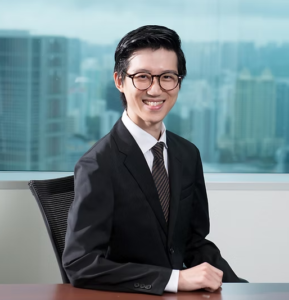
This article was produced by Global Law Experts. For specialist advice on this topic, contact Mark Cheng at MARK CHENG LAW CORPORATION, a member of the Global Law Experts network.
Member

No results available
posted 20 minutes ago

posted 20 minutes ago

posted 55 minutes ago

posted 2 hours ago
No results available
Find the right Legal Expert for your business
Sign up for the latest advisor briefings and news within Global Advisory Experts’ community, as well as a whole host of features, editorial and conference updates direct to your email inbox.
Naturally you can unsubscribe at any time.
Global Advisory Experts is dedicated to providing exceptional advisory services to clients around the world. With a vast network of highly skilled and experienced advisors, we are committed to delivering innovative and tailored solutions to meet the diverse needs of our clients in various jurisdictions.