

Since 2010, the Global Law Experts annual awards have been celebrating excellence, innovation and performance across the legal communities from around the world.
posted 3 hours ago
Achieving a tax neutral restructuring in Spain requires more than a sound commercial rationale, it demands precise alignment with the Fusiones, Escisiones, Aportaciones de activos y Canje de valores (FEAC) special regime codified in the Corporate Income Tax Act (Ley 27/2014), rigorous documentation, and an increasingly sophisticated approach to anti‑abuse scrutiny by the Central Economic‑Administrative Court (TEAC). With pre‑insolvency filings and distressed M&A activity rising sharply through 2024–2026, driven by the practical implementation of Spain’s modernised insolvency framework under Real Decreto Legislativo 1/2020, tax directors, CFOs and restructuring advisers face an urgent need for clear, stepwise guidance.
This article provides exactly that: a compliance decision flowchart, checklists for restructuring plans and pre‑insolvency sales, two worked numeric examples, and a red‑flag risk map drawn from TEAC rulings and practitioner experience.
A restructuring can qualify for tax neutral treatment under Spain’s FEAC regime if, and only if, all five conditions below are satisfied. Use this flowchart as a rapid screening tool before committing resources to detailed structuring.
If any of the five criteria above is not met, or cannot be convincingly evidenced, industry observers expect the AEAT to challenge the tax neutral treatment. The immediate next step is to assemble the documentation package described in Section 2 below and, where borderline, to consider requesting a binding tax ruling from the Dirección General de Tributos.
Understanding the current landscape for tax neutral restructuring in Spain requires tracing three interlocking legislative threads: the corporate tax neutrality framework, the insolvency reform, and the evolving anti‑abuse jurisprudence.
The FEAC special regime, originally transposing the EU Merger Directive, is now consolidated within the CIT Act (Ley 27/2014). It allows qualifying restructuring operations to defer immediate taxation on capital gains, provided the receiving entity assumes the transferor’s tax basis. This deferral, not an exemption, means that unrealised gains remain latent and will eventually crystallise when the receiving entity disposes of the assets.
On the insolvency side, the Consolidated Insolvency Text (Texto Refundido de la Ley Concursal), enacted by RDL 1/2020, was substantially reformed from 2022 onwards to incorporate the EU Directive on Restructuring and Insolvency. These reforms introduced a modern pre‑insolvency framework, restructuring plans that can be judicially approved and bind dissenting creditors, significantly increasing the volume and complexity of pre‑insolvency deal activity from 2024 through 2026.
The third thread is the TEAC’s increasingly rigorous scrutiny of business purpose. Administrative rulings from the TEAC have progressively tightened the evidentiary burden on taxpayers, removing tax neutrality where the primary motive is identified as obtaining a tax advantage, even where the operation technically satisfies the formal requirements.
| Date | Rule / Event | Practical Effect |
|---|---|---|
| 2014 (Ley 27/2014) | Consolidated Corporate Income Tax framework (FEAC regime included) | Establishes statutory FEAC tax neutrality mechanics for mergers, demergers, contributions and share exchanges. |
| 5 May 2020 (RDL 1/2020) | Consolidated Insolvency Text (Texto Refundido) | Modernises insolvency framework, basis for restructuring plans and pre‑insolvency filings. |
| 2022–2025 (reform / clarifications) | Practical implementation & TEAC rulings tightened anti‑abuse | Courts and TEAC remove tax neutrality where primary motive is tax advantage, increasing documentation burden. |
Tax neutrality under the FEAC regime is not automatic, it requires methodical compliance with four procedural steps and robust contemporaneous documentation.
The CIT Act defines the eligible categories: merger (including simplified merger of a wholly‑owned subsidiary), total demerger, partial demerger, contribution of a branch of activity, contribution of shares, and share exchange. Each category has distinct requirements. A partial demerger, for instance, requires the transfer of an autonomous branch of activity, a set of assets and liabilities constituting an independent economic unit capable of operating by its own means. A contribution of shares must result in the contributing entity acquiring a majority of the voting rights in the receiving entity (or, if it already holds a majority, increasing its stake).
Documenting the business purpose is the single most critical step for preserving tax neutrality in Spain. The FEAC regime presumes neutrality applies, but the AEAT may challenge it by demonstrating that the principal objective, or one of the principal objectives, of the transaction is obtaining a tax advantage. The burden then shifts to the taxpayer to rebut this presumption with contemporaneous evidence.
Essential evidence includes:
Where the business purpose is not self‑evident, for example, in intragroup reorganisations with no immediate operational change, it is advisable to seek a binding ruling (consulta vinculante) from the Dirección General de Tributos. This provides legal certainty and significantly reduces the risk of a later challenge.
The receiving entity must record all transferred assets and liabilities at the same values they held in the transferring entity’s tax records. No step‑up in basis is permitted. Any tax provisions, reserves, or deferred tax positions associated with the transferred assets must also carry over. This continuity obligation is the mechanism through which the FEAC regime achieves deferral rather than exemption, the latent gain remains and will crystallise upon subsequent disposal.
The operation must be disclosed in the CIT returns of all entities involved (transferor, receiving entity, and shareholders where relevant). Specific informational annexes must be completed, detailing the assets transferred, the values used, and the identity of the parties. Failure to comply with the reporting requirements does not automatically void neutrality, but it raises the risk of an AEAT inquiry and can be treated as an indicator of a lack of transparency.
The restructuring plan tax implications vary significantly by operation type, and advisers must assess each tax head individually. The table below maps the principal Spanish taxes against the four most common restructuring operations.
| Tax | Asset Sale | Share Sale | Merger / Demerger (FEAC) | Contribution of Branch |
|---|---|---|---|---|
| Corporate Income Tax (CIT) | Capital gain taxed at general rate (25%) | Capital gain taxed; participation exemption may apply | Deferred under FEAC, no immediate charge | Deferred under FEAC, no immediate charge |
| VAT | Applies unless transfer of economic unit (non‑supply rule) | Exempt (share transfer) | Non‑supply rule applies (economic unit) | Non‑supply rule applies (economic unit) |
| Transfer Tax (ITP) | May apply to real‑estate transfers | Generally exempt; exceptions for property‑rich companies | Exempt under FEAC | Exempt under FEAC |
| Stamp Duty (AJD) | Applies to notarised deeds for real estate | Generally not applicable | Exempt under FEAC | Exempt under FEAC |
| Withholding Tax | N/A (domestic); cross‑border may apply | May apply on deemed dividends to non‑residents | Deferred under FEAC | Deferred under FEAC |
Under Spanish VAT law, the transfer of a universalidad de bienes (an autonomous set of assets constituting an economic unit capable of independent operation) falls outside the scope of VAT entirely, it is classified as a non‑supply. This is critical for asset transfer tax in Spain: if the transferred assets do not constitute an economic unit, each individual asset transfer is subject to VAT at the standard rate (currently 21%), with no automatic right to reclaim for the buyer unless it is a registered VAT taxpayer with full deduction rights.
Where VAT applies (because the economic unit test is not met), Transfer Tax (ITP) generally does not, the two are mutually exclusive for the same transaction. However, Stamp Duty (AJD) applies to the notarised public deed documenting the transfer of real estate, typically at rates between 0.5% and 1.5% depending on the autonomous community. Under the FEAC regime, both ITP and AJD are exempt for qualifying operations, making FEAC treatment doubly attractive for operations involving Spanish real estate.
Consider a Spanish company (Co A) contributing a factory with a tax book value of €2 million and a market value of €5 million to a newly formed subsidiary (Co B):
Pre‑insolvency sale tax risks are among the most commercially significant issues in Spanish distressed transactions, and they affect sellers, buyers and lenders differently. The 2022–2026 uptick in pre‑insolvency filings under the reformed Consolidated Insolvency Text has made this a front‑of‑mind concern for deal teams.
The pre‑insolvency sale tax consequences differ materially depending on whether the deal is structured as a share purchase or an asset purchase:
| Factor | Share Purchase | Asset Purchase |
|---|---|---|
| CIT for seller | Capital gain on shares; participation exemption may shelter | Capital gain on each asset at general rate |
| VAT | Exempt (share transfer) | Applies unless economic unit |
| Buyer basis step‑up | No step‑up in underlying asset bases | Step‑up to acquisition cost |
| Successor liability | Full (buyer acquires the company with all liabilities) | Limited (subject to specific statutory successor rules) |
| Tax losses | Remain with the company (subject to anti‑abuse limits) | Cannot transfer to buyer |
Scenario: a distressed Spanish manufacturer sells its production line (book value €1.5 million, market value €4 million) and its warehouse (book value €800,000, market value €2 million) to a third‑party buyer. The production line and warehouse together do not constitute an economic unit (no staff, contracts, or receivables transfer).
Distressed M&A in Spain offers two principal acquisition routes, purchase under a judicially approved restructuring plan, or acquisition during formal insolvency proceedings, and each has distinct tax neutral restructuring implications.
Under a restructuring plan approved by the court, the plan itself can authorise the transfer of assets or business units to a buyer, often on terms that bind dissenting creditors. From a tax perspective, the key advantage is that the plan may incorporate restructuring operations (mergers, demergers, contributions) that qualify for FEAC treatment, thereby preserving tax neutrality for the transferee. The likely practical effect is that buyers who negotiate to acquire through a plan can often structure the acquisition to defer CIT and eliminate transfer taxes.
Acquisition during formal insolvency proceedings (the fase de liquidación) tends to be less tax‑efficient. Assets are typically sold individually or in lots, often by court‑appointed administrators, and the scope for structuring within the FEAC regime is limited. Buyers acquire assets at market value with a clean tax basis, but the seller (the insolvent estate) bears a CIT charge on any gain, and VAT may apply to each individual asset sale.
The TEAC and Spanish courts have removed FEAC tax neutrality in a growing number of cases where the principal purpose of the restructuring is identified as obtaining a tax advantage. Practitioners should note that the anti‑abuse analysis is substance‑based: formal compliance with the FEAC requirements is necessary but not sufficient. Administrative rulings have established that where the dominant motive is tax‑driven, neutrality can be denied retroactively, resulting in a full tax assessment plus interest and potentially penalties.
The following red flags, drawn from TEAC decisions and practitioner guidance, are the most commonly cited grounds for denying tax neutrality:
The following three checklists consolidate the requirements discussed above into actionable working documents. Each item should be completed, signed off, and retained as part of the permanent tax file for the restructuring.
| Phase | Timeframe | Key Deliverable |
|---|---|---|
| Preliminary assessment | Weeks 1–2 | Operation type confirmed; initial tax impact memo |
| Documentation assembly | Weeks 3–6 | Board minutes, valuation, business plan completed |
| Binding ruling request (if needed) | Weeks 4–8 | Ruling request filed with Dirección General de Tributos |
| Execution and closing | Weeks 7–12 | Deeds signed, operations registered, assets transferred |
| CIT reporting | Within filing period for the relevant fiscal year | CIT returns with FEAC annexes filed |
Facts: A Spanish family‑owned group operates through two companies, Co Alfa (manufacturing) and Co Beta (distribution). The family decides to consolidate both under a new holding company (HoldCo) to facilitate external investment. Co Alfa has net assets with a tax book value of €3 million and a market value of €8 million. Co Beta has net assets with a tax book value of €1.5 million and a market value of €4 million.
Structure: The shareholders contribute 100% of the shares of Co Alfa and Co Beta to HoldCo in exchange for newly issued HoldCo shares. This is a share‑for‑share exchange, qualifying under the FEAC regime.
Facts: A distressed hospitality company owns two hotels (combined book value €4 million, market value €10 million) and employs 120 staff. A buyer is interested but proposes a straightforward asset purchase of the hotels only.
Initial tax cost (asset purchase without FEAC):
Restructured approach: The seller contributes the two hotels, together with the 120 employees, operational contracts, licences and receivables, into a new subsidiary (NewCo) as a branch of activity, qualifying under FEAC. The buyer then acquires 100% of the shares of NewCo.
The framework for achieving a tax neutral restructuring in Spain is powerful but demands disciplined execution. Based on the analysis above, the following six actions should be initiated within the first 90 days of any restructuring mandate:
Tax neutral restructuring in Spain remains one of the most effective tools available to distressed and growing companies alike. The FEAC regime, properly applied, can eliminate or defer millions of euros in tax charges. But the post‑2022 enforcement environment, marked by TEAC’s substance‑over‑form approach, means that documentation, planning and professional guidance have never been more important.
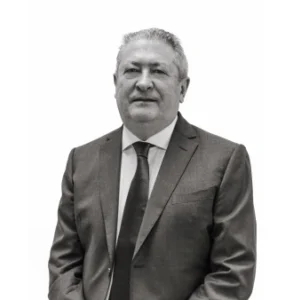
This article was produced by Global Law Experts. For specialist advice on this topic, contact Juan Font Servera at FONT MORA SAINZ DE BARANDA, a member of the Global Law Experts network.
Member

No results available

posted 8 minutes ago



posted 4 hours ago
No results available
Find the right Legal Expert for your business
Sign up for the latest advisor briefings and news within Global Advisory Experts’ community, as well as a whole host of features, editorial and conference updates direct to your email inbox.
Naturally you can unsubscribe at any time.
Global Advisory Experts is dedicated to providing exceptional advisory services to clients around the world. With a vast network of highly skilled and experienced advisors, we are committed to delivering innovative and tailored solutions to meet the diverse needs of our clients in various jurisdictions.