
Since 2010, the Global Law Experts annual awards have been celebrating excellence, innovation and performance across the legal communities from around the world.
posted 2 hours ago
Turkey’s citizenship by investment programme has become one of the most sought-after in the world, and it’s not hard to see why. Since Ankara dropped the real estate threshold to $250,000 in 2018, more than 40,000 investors have applied, collectively channelling an estimated $15 billion into the Turkish economy. The threshold now sits at $400,000, and demand shows no sign of slowing.
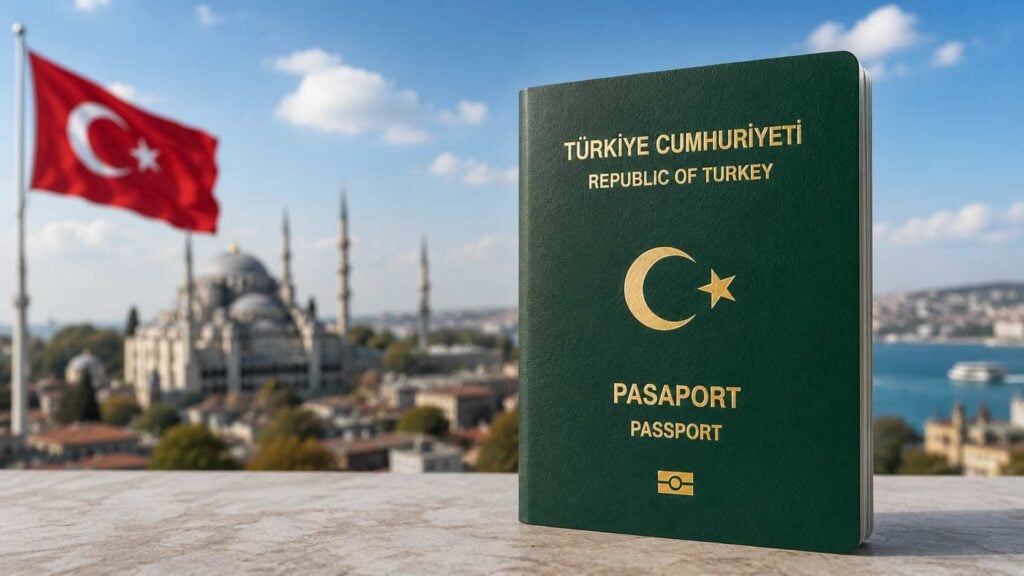
Most conversations about Turkish CBI revolve around the standard burgundy passport — its 110-plus visa-free destinations, fast processing times, and the additional access it provides to US E-1 and E-2 investor visas. These are legitimate selling points. But there’s a second document in the picture that almost never gets mentioned in programme comparisons — the Turkish Special Passport, known widely as the Green Passport.
For the right investor profile, this could be the more interesting document of the two.
The Green Passport, or Hususi Damgalı Pasaport in Turkish, is a special-category travel document issued under Turkish national law. It’s not a perk or an upgrade to the ordinary passport — it’s a separate instrument with its own eligibility criteria, issued to a defined group of qualifying holders.
Traditionally, that group has been senior civil servants. Specifically, government employees who have reached the first, second, or third grade on the Turkish pay scale — a level that typically takes 15 or more years of service and a university education to reach. Mayors also hold it during their terms of office, and qualifying retirees can retain it after leaving their posts.
For everyone outside the civil service, including citizenship-by-investment investors, there’s a different route in, and it runs through Turkey’s export sector.
Holders of this passport can enter the Schengen Area visa-free for up to 90 days in any 180-day period, with total coverage extending to roughly 158 destinations worldwide. The document is valid for five years and renewable, provided the eligibility conditions that triggered it remain in place.
The export route was formalised under the “Principles for Issuing Special Passports to Exporters,” introduced in 2017. The logic is straightforward: Turkish companies that demonstrate sustained, significant export activity can qualify their shareholders, directors, and employees for Green Passport eligibility.
The current threshold, calculated as the average over the three most recent calendar years, stands at $500,000 in annual exports for 2026.
In practice, for a CBI investor, the sequence works like this: you obtain Turkish citizenship through the standard real estate route, then establish or acquire a Turkish company. You build out export operations that exceed $500,000 annually and sustain that level for three consecutive calendar years. That’s the foundation.
Once the three-year track record is established, the final steps are relatively quick. You obtain a certificate of compliance from the relevant Exporters’ Union, which verifies the company’s export figures, and the application goes to the Ministry of Interior for final approval. From that point, the process typically takes between four and eight weeks.
It’s important to note that eligibility is assessed case by case. The Exporters’ Union scrutinises the numbers, but the Ministry retains full authority over the final decision. Nothing is automatic, and nothing is guaranteed.
This isn’t a route for everyone, and it’s worth being direct about that.
The export pathway suits investors who are already operating in international trade, or those who intend to build a genuine Turkish export business as part of a wider commercial or relocation strategy. For those investors, the Green Passport isn’t an extra burden — it’s a natural byproduct of what they’re already building.
Turkey’s commercial position makes the $500,000 export threshold achievable in the right sectors. The country has maintained a customs union with the EU for three decades, operates an extensive network of free trade agreements, and bilateral trade between Turkey and Europe exceeds €200 billion. In sectors like automotive, textiles, steel, and machinery, Turkish goods are already deeply woven into European supply chains. For a business operating in any of these spaces, reaching the threshold is a realistic commercial goal.
That said, if your sole objective is fast Schengen access without the intention of building a real business, this route isn’t the right fit. Caribbean CBI programmes grant immediate visa-free travel from day one. Some EU golden visas offer a faster path to Schengen mobility. The Green Passport export pathway is measured in years, not months, so the investment of time and commercial effort has to make sense for other reasons too.
For anyone evaluating Turkish citizenship as a long-term mobility asset rather than a quick fix, three recent developments add meaningful context.
The SEPA proposal. In February 2026, European Commissioner for Enlargement Marta Kos visited Ankara and proposed that Turkey join the Single Euro Payments Area. This is the 41-country framework that governs cross-border euro transfers. If the proposal is accepted, Turkish businesses and the diaspora in Europe would be able to send and receive euro payments at the same speeds and costs as domestic EU transactions. Turkey’s Ministry of Finance is currently reviewing the offer. For comparison, smaller EU candidate countries that joined SEPA last year, namely Albania, Moldova, Montenegro, and North Macedonia, could collectively save up to €500 million as a result.
The Industrial Accelerator Act. On 4 March 2026, the European Commission published a draft regulation introducing “Made in EU” labelling and low-carbon requirements for public procurement and subsidies in strategic sectors. Critically, a provision in the draft stipulates that goods from countries with a customs union or free trade agreement with the EU may qualify for “Union origin” status in procurement contexts. Turkey, as a customs union partner, falls within that framework, a development Turkey’s Trade Minister Ömer Bolat publicly welcomed. The legislation remains a draft. It still requires approval from EU member states and the European Parliament, and Turkey’s direct access to EU public tenders remains restricted for now.
The Schengen cascade rule. In July 2025, the EU adopted a tiered visa system for Turkish nationals with an established travel history. After holding and lawfully using two Schengen visas within a three-year period, a Turkish citizen can apply for a one-year multi-entry visa. From there, the progression moves to a three-year, and eventually a five-year, multi-entry visa. Consulates retain case-by-case discretion throughout. The progression isn’t automatic. And while Turkey has fulfilled 66 of the 72 benchmarks in its EU visa liberalisation dialogue, the remaining six, which touch on politically sensitive areas like anti-terrorism legislation and Europol cooperation, have been outstanding since 2016.
Put it all together and Turkish citizenship starts to look considerably more layered than its standard passport ranking alone suggests.
The Green Passport is not a shortcut. It demands real commercial substance — a functioning export business, a multi-year track record, and a successful regulatory review. There are no guarantees at the end of the process, and the timeline is not comparable to faster programmes elsewhere.
But for investors who are already in the right commercial orbit, or who are planning a genuine Turkish business presence as part of a broader strategy, this pathway adds a dimension to the Turkish CBI decision that most comparisons entirely miss. Layer that with the shifting EU-Turkey dynamic — SEPA talks, the Industrial Accelerator Act, the Schengen cascade — and it becomes clear that Turkish citizenship is accumulating more practical value than the passport index rankings reflect.
Navigating this territory requires more than a checklist. The interplay between Turkish CBI, export qualification, corporate structuring, and the evolving EU-Turkey relationship calls for advisors who understand the full picture, not just one piece of it.
Knightsbridge is a Dubai-headquartered, award-winning firm with over 15 years of experience across legal, immigration, and wealth structuring services. With offices in the UAE, London, Istanbul, and Milan, and a team that has guided more than 750 families through citizenship and residency programmes worldwide, Knightsbridge is well-positioned to advise on both the Turkish CBI application and the subsequent steps toward Green Passport eligibility.
If you’d like to understand whether this pathway makes sense for your situation, get in touch to arrange a private consultation with our team.
Author


No results available
posted 43 minutes ago
posted 46 minutes ago

posted 2 hours ago

posted 2 hours ago

posted 3 hours ago

posted 6 hours ago
No results available
Find the right Legal Expert for your business
Sign up for the latest advisor briefings and news within Global Advisory Experts’ community, as well as a whole host of features, editorial and conference updates direct to your email inbox.
Naturally you can unsubscribe at any time.
Global Advisory Experts is dedicated to providing exceptional advisory services to clients around the world. With a vast network of highly skilled and experienced advisors, we are committed to delivering innovative and tailored solutions to meet the diverse needs of our clients in various jurisdictions.